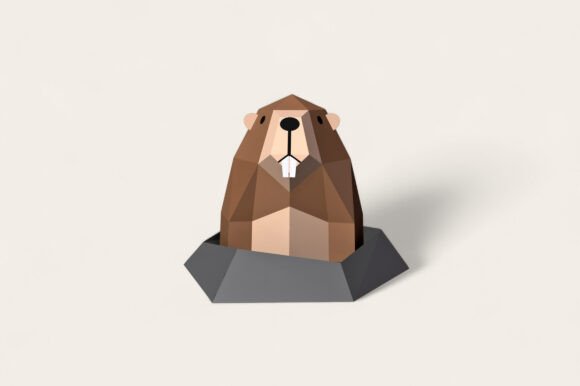
DIY Groundhog 3D SVG for Unique Shapes
As a brand designer who has spent the last decade helping local businesses find their visual voice, I am constantly on the hunt for assets that do more than just fill space. We are not looking for generic clipart; we are looking for character. Recently, I evaluated the DIY Groundhog - 3d Papercraft for a potential client project, and it immediately stood out as a versatile graphic design asset with significant potential for small business branding. This is not merely a digital file; it is a tactile experience waiting to happen.
The first impression of this design is undeniably charming and whimsical. It suggests a brand personality that is approachable, handmade, and deeply connected to seasonal traditions. For a local business, such as a boutique bakery, a children’s bookshop, or an artisanal candle maker, this mood is invaluable. It feels organic and playful, avoiding the sterile coldness of modern minimalist trends while still maintaining a clean, professional aesthetic. When I look at the Shapes involved in this 3D SVG design, I see an opportunity to create a stronger emotional connection with customers who crave authenticity.
Integrating the Asset into Real Local Business Projects
Let us consider a real-world scenario. Imagine a local coffee shop launching a limited-edition "Spring Awakening" blend. The owner wants packaging that feels personal and crafted, not mass-produced. Here, the DIY Groundhog - 3d Papercraft becomes the hero of the packaging design. Instead of a flat printed label, the shop could use the provided PDF and DXF files to create actual paper craft decorations for their gift bags or window displays. This transforms a simple transaction into an experience.
For product sellers and handmade businesses, the versatility of this asset is its strongest feature. You receive PDF, DXF, EPS, PNG, and JPG files, which means you are covered for both physical production and digital marketing. The PNG files with transparency are perfect for social media graphics, allowing you to overlay the groundhog onto lifestyle photos without tedious editing. The vector formats (EPS and DXF) ensure that if you need to scale the image for a large poster or shrink it for a tiny product label, the quality remains crisp. This flexibility is crucial for maintaining a consistent brand identity across all touchpoints.
Enhancing Brand Presentation and Visual Hierarchy
One of the biggest challenges in small business branding is creating a memorable visual hierarchy. Customers scan shelves and feeds quickly. A unique illustration like this groundhog acts as an anchor. It draws the eye and creates better product recognition. When used correctly, it supports professional branding by adding a layer of depth and interest that flat designs often lack.
Consider the assembled size of 20 x 26 x 25 cms. This is substantial enough to be a standalone decorative piece in a retail environment. For a florist or home decor shop, this papercraft could serve as a seasonal centerpiece, driving foot traffic and encouraging social shares. It improves customer trust because it shows attention to detail. When a brand invests in high-quality, thoughtful design assets, consumers perceive the products themselves as higher quality. It signals that the business cares about aesthetics and craftsmanship.
Strategic Placement in Marketing Visuals
Where does this asset work best? It shines in contexts that celebrate creativity and seasonality. It is ideal for:
- Product Mockups: Use the 3D render to show customers what the final craft looks like, enhancing the perceived value of your digital product or kit.
- Seasonal Packaging: Add the groundhog motif to hang tags or thank-you cards for February and March campaigns.
- Promotional Banners: The bold shapes work well on website headers announcing spring sales.
- Educational Content: If you run workshops, this serves as an excellent example of what participants can achieve, highlighting the two-hour assembling time as a manageable, fun activity.
However, there are places where you must use this asset carefully. It is not suitable for formal corporate branding or luxury minimalist brands where simplicity is the primary value proposition. Avoid placing it on crowded product packaging where it might compete with essential legal information or ingredient lists. On very small labels, the intricate details of the papercraft folds might get lost, so always test the scale. Additionally, ensure there is sufficient contrast; placing a light-colored paper craft design on a low-contrast background will reduce its impact.
Practical Notes from a Brand Designer
Before you commit to using the DIY Groundhog - 3d Papercraft in a client project or your own commercial design workflow, there are several practical steps you should take. First, always confirm the commercial license terms. While many creative marketplaces allow for end-product sales, you need to be clear on whether you can resell the digital files themselves or only the physical crafted items.
Test the design on real packaging mockups. Do not rely solely on screen previews. Print the PNG or JPG on the actual material you plan to use—whether it is matte cardstock, glossy sticker paper, or kraft paper. Colors shift significantly between screen and print. Check the black and white usage as well; a strong design should hold its form even without color. This is particularly important for cost-effective printing options.
Inspect the vector editability if you are using the SVG or EPS files. Can you easily adjust the line weights? Can you change the colors to match your specific brand palette? Testing the asset beside different typography styles is also essential. I found that this groundhog design pairs beautifully with handwritten fonts, reinforcing the handmade vibe, but it can also work with clean sans serif fonts for a more modern, editorial look. Avoid pairing it with overly ornate script fonts, which may clash with the geometric nature of the papercraft folds.
Finally, consider the user experience if you are selling this as a digital product. The description notes that you need a colored printer, glue, scissors, a craft knife, and a scorer or bone folder. Be transparent about these requirements in your marketing visuals. Show the process. Video content showing the two-hour assembly time can be incredibly engaging for social media, demonstrating the value and fun of the project. This transparency builds trust and reduces customer support queries.
In conclusion, the DIY Groundhog - 3d Papercraft is more than just a cute illustration. It is a strategic tool for local businesses looking to differentiate themselves through tactile, engaging, and seasonal branding. Whether you are designing marketing visuals for a boutique, creating unique packaging design for a food business, or developing content for a creative workshop, this asset offers the flexibility and charm needed to stand out in a crowded marketplace. By understanding its strengths and limitations, you can leverage it to create polished, professional, and emotionally resonant brand experiences.