Floor Vase - 3d Papercraft: A Designer’s Review
As an experienced embroidery designer and product reviewer, I approach every new digital asset with a critical eye. We are constantly bombarded with files that look stunning on a screen but fail miserably under the needle. Today, I am evaluating Floor Vase - 3d Papercraft. At first glance, the title suggests a paper crafting project, and the provided specifications confirm this is a 3D SVG intended for assembly using colored printers, glue, and scissors. However, for the modern creative entrepreneur, the value of such a design often lies in its visual geometry and potential for adaptation or complementary use in mixed-media projects. Let us dive into how this specific asset fits into the broader ecosystem of handmade goods, particularly for those of us who bridge the gap between digital design and physical textile art.
First Impressions: Geometry Meets Craft
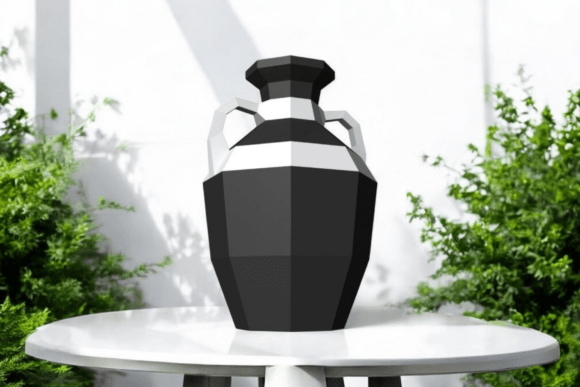
The initial mood created by Floor Vase - 3d Papercraft is one of structured elegance. The description highlights a vase with handles, boasting an assembled size of 60 x 40 x 38 CMS. This is not a tiny trinket; it is a statement piece. For an embroidery designer, the "Shapes" category is often where we find the most versatile elements. The clean lines and defined structure of a floor vase offer a strong silhouette. While this specific file is optimized for papercraft assembly over two hours, the visual language it employs—bold outlines, distinct panels, and handle details—translates well into the mindset needed for creating complementary embroidered items. When I look at this design, I do not just see a paper model; I see a aesthetic benchmark for home decor that can inspire coordinated textile products.
Real-World Application: Beyond the Paper
Let us consider a realistic scenario. Imagine you are preparing a custom order for a boutique client who wants a cohesive home styling package. They have purchased the Floor Vase - 3d Papercraft to display in their living room. As a maker, you have the opportunity to sell them a matching embroidered patch or a tote bag design that echoes the vase’s geometric style. This is where understanding the source material becomes crucial. By reviewing the digital embroidery file or associated graphics (PDF, DXF, EPS, PNG, JPG), you can extract color palettes and structural motifs.
If you were to create a sweatshirt embroidery piece inspired by this vase, you would focus on the handles and the verticality of the shape. The design’s inherent balance makes it suitable for custom apparel where symmetry is key. For Etsy sellers and small shop owners, offering a bundle that includes both the digital papercraft file for home decor and a coordinating machine embroidery design for textiles can significantly increase average order value. It creates a brand narrative that feels thoughtful and curated.
Technical Considerations for Embroidery Adaptation
While Floor Vase - 3d Papercraft is primarily a 3D assembly project, translating its visual essence into stitch requires careful planning. If you are adapting the imagery for an applique design, you must consider the stitch density. Large, flat areas in the original graphic might need to be broken up with fill stitch patterns that mimic texture, rather than solid blocks of color which can look heavy on fabric.
For those attempting to digitize this shape directly, pay close attention to the curves of the handles. These areas are prone to puckering if the running stitch underlay is insufficient. You must test the design on scrap fabric first. Check your thread colors against the original PDF previews to ensure fidelity. If the original design uses subtle gradients, remember that embroidery relies on solid thread colors. You may need to simplify the palette to maintain clarity, especially on textured fabrics like towels or denim.
Where to Use Caution
Not every surface is suitable for complex geometric designs. When applying vase-inspired motifs to stretchy fabric or curved surfaces like caps, distortion is a real risk. The rigid structure of a floor vase does not naturally conform to the roundness of a hat without significant digitizing adjustments. Additionally, avoid placing dense stitch areas on thin fabrics without proper stabilizer support. For baby embroidery items, ensure that any adapted design avoids small, detachable components or excessively dense stitching that could irritate sensitive skin.
If you are working with dark fabrics, the contrast becomes your best friend. Use light thread colors to make the vase shape pop. Conversely, on light fabrics, deep, rich tones will provide the necessary definition. Always inspect small details; if the original Floor Vase - 3d Papercraft has intricate scoring lines, these should likely be omitted in embroidery to prevent thread breaks and unnecessary bulk.
Enhancing Visual Appeal and Brand Value
Incorporating well-reviewed design assets like this into your workflow elevates your finished product. Customers trust makers who demonstrate attention to detail. When your personalized gift or holiday embroidery item reflects a coherent design language, it signals professionalism. Whether you are creating kitchen towel sets or pillow covers, the structural integrity of the source design influences the perceived quality of the stitch-out.
For commercial embroidery projects, consistency is key. Using high-quality source files ensures that your printable mockup images look accurate, reducing customer disputes. When buyers see a clear, crisp representation of the design in your design assets library, they are more likely to engage. This builds brand recognition and encourages repeat business from clients who appreciate the blend of modern geometry and traditional craft.
Practical Notes for the Modern Maker
Before you commit to a large production run or a high-value client project, take these steps:
- Verify Licensing: Confirm whether the included files (PDF, DXF, EPS, PNG, JPG) allow for commercial use of derived embroidered products. The description mentions assembling time and tools but does not explicitly state embroidery licensing terms.
- Test Stitch Density: Run a sample on the actual fabric you intend to use. Adjust pull compensation if the shape appears distorted.
- Check Hoop Size: Ensure your machine’s hoop can accommodate the full scale of the design if you plan to stitch it large. If scaling down, verify that details remain visible.
- Contrast Check: View your design in black and white to ensure the shape is recognizable without relying solely on color differences.
In conclusion, Floor Vase - 3d Papercraft serves as an excellent example of how diverse digital formats can inform our textile work. While it is fundamentally a paper assembly project requiring glue, scissors, and a craft knife, its visual structure offers valuable insights for embroidery designers. By understanding the geometry and aesthetic of such pieces, we can create more cohesive, appealing, and professional handmade products. Whether you are an apparel decorator or a creative entrepreneur selling small shop products, let the precision of this design inspire your next stitch.